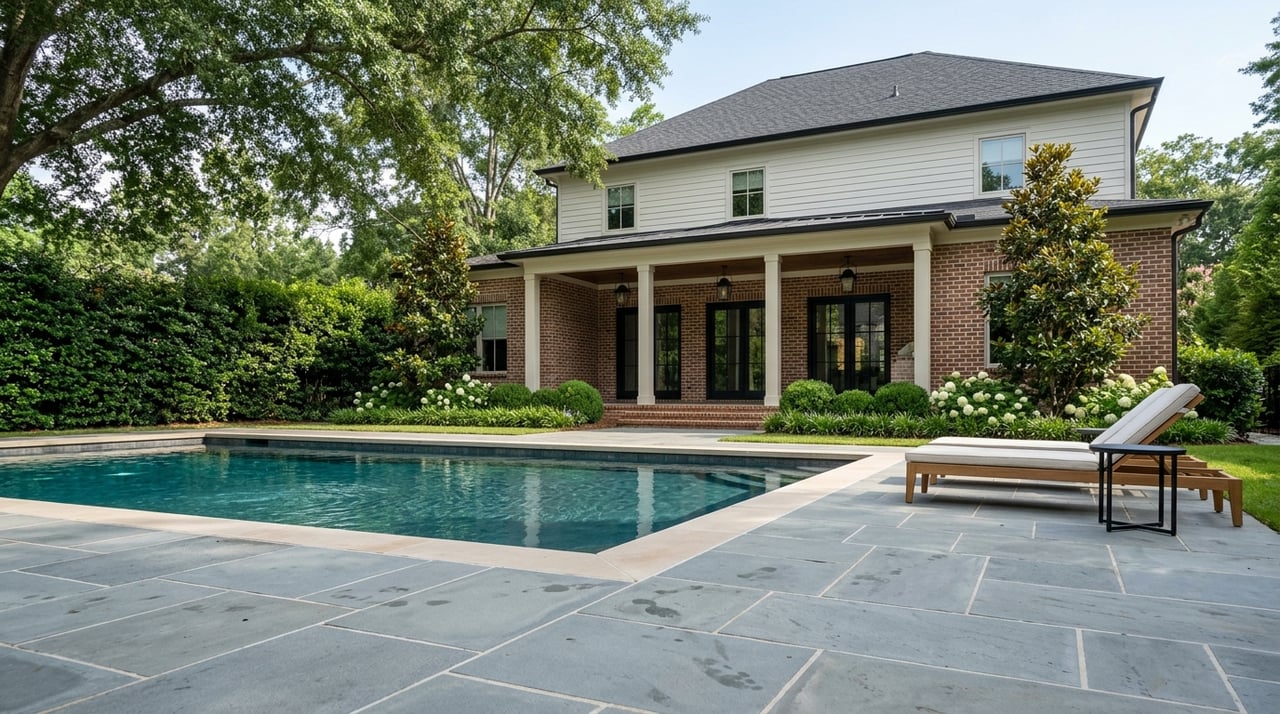
Selling Your Chapel Hill Home in a University Market
July 9, 2026
July 9, 2026
If you plan to sell in Chapel Hill, you are not listing in a typical suburban market. University rhythms, relocation demand, and neighborhood-by-neighborhood price differences can all shape how buyers respond to your home. With the right timing, pricing, and presentation, you can position your property to stand out and attract serious interest. Let’s dive in.
Chapel Hill is shaped by more than just one buyer group. UNC is a major influence, but Orange County also describes the area as a center for healthcare, high-tech employment, and regional access, including transit connections and proximity to RDU. That means your buyer could be local, relocating, university-connected, or moving for work.
That mix matters when you list your home. A strategy that works in a more predictable suburb may miss the mark here, especially if it ignores timing, online presentation, or the expectations of out-of-town shoppers. In Chapel Hill, broad appeal and local accuracy both matter.
Recent market data points to a competitive environment, but not one where sellers can skip the basics. Realtor.com describes Chapel Hill as a seller’s market in May 2026, with 431 homes for sale, a median listing price of $750,000, median rent of $1,662, and a median 36 days on market. Redfin reports a median sale price of $626,625 over the last three months, about 29 days on market, and roughly four offers on average.
The key takeaway is simple: buyers are active, but results still depend on preparation and pricing discipline. These numbers also come from different sources with different methods, so they should be treated as directional rather than interchangeable. For your home, recent closed sales in your immediate area will tell the more useful story.
In Chapel Hill, neighborhood context can change the conversation fast. Realtor.com shows meaningful variation in median listing prices, with examples like Meadowmont around $1.2 million, Southern Village around $622,450, and The Oaks around $1.25 million. That kind of spread is why countywide or metro averages can be too blunt for a pricing decision.
Orange County’s Tax Office says the most reliable comparable sales are the ones most similar to the subject property, preferably from the same neighborhood first. Its guidance describes using about three to five sales and adjusting for differences such as square footage, bathrooms, heating and air, porches, and garages. That is a smart framework for sellers because it keeps pricing grounded in the features buyers are actually comparing.
It also helps to stay consistent with the data you review. Listing price, closed sale price, and days on market are all useful, but they are not the same measure. If you want a reliable read on value, you need to compare like with like.
Because Chapel Hill is a university market, seasonality has an extra layer here. UNC’s 2026 to 2027 academic calendar shows fall classes beginning August 17, 2026, and spring classes beginning January 6, 2027. Housing materials from UNC also note that first-year students are required to live on campus, while two-thirds of students live off campus and graduate housing demand exceeds supply.
For sellers, that supports a practical listing strategy. If you want to catch university-adjacent demand, the strongest windows are often late winter to early spring, late spring to early summer, and the period before mid-August. Spring is also a sensible default more broadly, with Realtor.com naming April 13 to 19 as the strongest week nationally in its 2026 best time to sell report.
That does not mean every home should wait for spring. If your property is ready, the best timing is when your home can hit the market in top condition and meet an active buyer pool. In Chapel Hill, readiness and timing work best together.
In a market where many buyers begin online and some may be relocating, presentation carries real weight. NAR’s 2025 staging report found that 83% of buyers’ agents said staging made it easier for buyers to visualize a home as a future residence. It also found that 60% said staging affected most buyers’ view of the home most of the time.
The same report noted that 29% of agents saw a 1% to 10% increase in offered value when a home was staged, and 49% of sellers’ agents observed reduced time on market. For Chapel Hill sellers, that supports investing in a polished, camera-ready presentation rather than settling for a clean-but-basic approach.
The most important spaces to prioritize are the living room, primary bedroom, and kitchen. Those rooms often shape a buyer’s first impression, both online and in person. Bright, uncluttered spaces and flexible room use tend to resonate well with a broad buyer pool.
Before your home goes live, focus first on the updates that help buyers see the property clearly. You do not need to overhaul everything, but you do want the home to feel cared for, functional, and easy to picture as a future residence.
A strong pre-listing checklist often includes:
For many Chapel Hill sellers, this is where curated staging and professional listing presentation can make a measurable difference. In a market with move-up buyers, professionals, and relocation shoppers, polished presentation helps your home compete across several audiences at once.
Your listing should reflect how people actually shop for Chapel Hill homes. Some buyers already know the area well. Others are comparing communities from out of town and may be evaluating commute patterns, transit access, and overall lifestyle convenience alongside the property itself.
Orange County notes Chapel Hill’s connections to UNC, healthcare, high-tech employers, free Chapel Hill Transit service across Chapel Hill, Carrboro, and the University, and access to RDU. Those facts can support listing copy and marketing materials because they help explain location value in clear, factual terms.
For that reason, strong marketing in Chapel Hill is usually more than a few photos and a price. Professional photography, video, and virtual tours matter heavily to buyers’ agents, according to the staging research. If your home shows well online, you improve the odds that both local and relocation buyers will take the next step.
A smooth listing launch is not only about looks and timing. It also depends on paperwork being ready before buyers start circling. In North Carolina, the real estate commission says most sellers of residential one- to four-unit property must provide the Residential Property and Owners’ Association Disclosure Statement and the Mineral and Oil and Gas Rights Disclosure Statement before an offer.
Getting these materials organized early can help prevent delays once interest builds. It also supports a cleaner, more confident process for both you and your buyer. In a market where timing can matter, early organization is part of smart preparation.
Selling in a university market works best when your strategy is tailored to the home, the neighborhood, and the buyer pool most likely to respond. In Chapel Hill, that usually means anchoring price to recent nearby comps, launching in a strong demand window, and presenting the home in a polished, flexible, online-friendly way.
That is especially important in the mid-to-high price ranges, where buyers tend to compare closely and expect a high level of presentation. A custom plan can help you avoid generic pricing, rushed prep, and marketing that does not reflect what makes your location and property distinct.
If you are thinking about listing your Chapel Hill home, Bespoke Realty Group can help you build a tailored strategy around timing, pricing, staging, and presentation so you can go to market with clarity and confidence.
We pride ourselves in providing personalized solutions that bring our clients closer to their dream properties and enhance their long-term wealth.