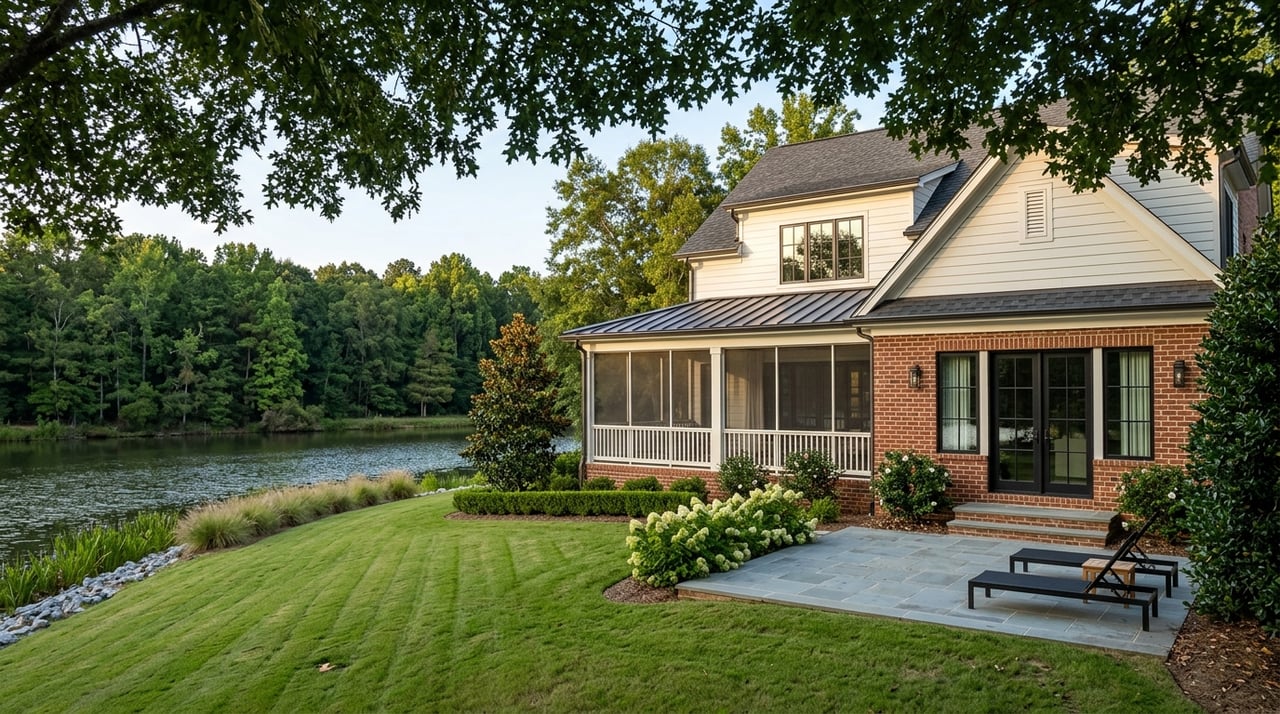
Comparing Wake Forest Golf and Lake Communities
May 14, 2026
May 14, 2026
If you are drawn to both fairways and waterfront views, Wake Forest gives you more than one way to live that lifestyle. Some neighborhoods center on golf and club amenities, while others lean into lake access, trails, and a more outdoors-first feel. If you are trying to sort out which setting matches your budget, routine, and long-term goals, this overview will help you compare the main options with more confidence. Let’s dive in.
Wake Forest continues to draw buyers who want a growing suburban town with a revitalizing downtown and a strong mix of newer and established neighborhoods. The town’s planning materials highlight growth management while strengthening the historic core, which helps explain why many buyers are attracted to both the community feel and the expanding amenities.
Downtown Wake Forest is one of the area’s biggest lifestyle draws. The town describes it as a walkable district with art galleries, specialty shops, coffee, boutiques, dining, and nightlife. At the same time, local planning materials note that many residents still make larger grocery trips to outlying supermarkets, so it helps to think about both charm and day-to-day convenience when comparing neighborhoods.
For lake-oriented buyers, Falls Lake State Recreation Area is a major regional asset. It offers reservoir recreation, trails, and shoreline activities across Wake and Durham counties, giving Wake Forest residents access to outdoor time beyond their immediate neighborhood.
The first step is deciding what kind of lifestyle you want most often, not just what sounds appealing on paper. A golf-centered community may offer a more structured amenity package, while a lake-oriented neighborhood may prioritize trails, scenery, and open-air gathering spaces.
In Wake Forest, that difference is fairly clear. Heritage and Hasentree are the best-known golf-focused choices in this group, while Holding Village and The Cove at Falls Lake stand out for buyers who want a lake-oriented setting.
Golf communities often appeal to buyers who want amenities close to home and a neighborhood identity built around the course or club. In Wake Forest, the two most recognizable options differ quite a bit in price point, home style, and overall feel.
Heritage is one of Wake Forest’s best-known master-planned golf communities, and it tends to offer the broadest mix of housing types in this category. Heritage Fairview includes golf villas on the course as well as upscale townhomes with private courtyards and detached garages overlooking the 1st and 10th fairways.
This variety matters if you want flexibility. Public examples cited in the research range from a townhome around $366,000 to another around $449,000, with single-family homes and listings around $709,000 to $1.075 million. Redfin neighborhood data places the median sale price around $558,000, but the available housing mix is wider than that number alone suggests.
Heritage Club membership packages include golf, swim and tennis, social activities, and fitness access. That is important from a budgeting standpoint because membership and homeownership costs should be treated as separate line items.
HOA dues can also vary by subsection. Public listing examples show fees ranging from roughly the low $20s per month to roughly $220 per month, so you will want to review the exact sub-association rather than assume one standard fee for the whole community.
For many buyers, Heritage works well because it combines an established golf setting with multiple home options and relatively close proximity to downtown Wake Forest. If you want the golf-course lifestyle without limiting yourself to one home type, this is often the most flexible place to start.
Hasentree is the more club-centric luxury golf option in Wake Forest. The club describes itself as the premier golf and country club in town and highlights a Tom Fazio-designed 7,074-yard par-71 course along with dining, swimming, fitness, tennis, pickleball, a childcare center, spa, trails, and a full social calendar.
This community is generally better suited to buyers who expect to use the club often. It is less about living near a course as an occasional perk and more about choosing a private-club lifestyle as part of your everyday routine.
Redfin neighborhood data puts the median sale price around $875,000. Recent public examples include homes around $950,000 and $1.175 million, which places Hasentree firmly in the upper tier of Wake Forest golf communities.
Budgeting deserves extra attention here too. Public listing data shows HOA dues in the low hundreds to mid-$300s per month, and buyers should confirm whether club membership, HOA dues, and golf-related charges are all separate. If you are comparing monthly ownership costs across communities, that detail can make a meaningful difference.
Lake-oriented communities in Wake Forest are not all the same. One offers a newer, active neighborhood centered around a community lake, while another is a more private custom-home enclave near Falls Lake.
Holding Village is the clearest lake-centered neighborhood in Wake Forest. Community materials say buyers come for the homes but stay for the lake, parks, and trails, with the 15-acre Holding Lake serving as the focal amenity.
This neighborhood also offers a broader range of housing than many buyers expect. The current build includes townhomes, single-family homes, and apartments. Tri Pointe’s townhomes range from about 1,724 to 2,328 square feet and start in the mid-$300,000s.
Redfin market pages show a median sale price around $490,000, with current new listings around $375,000. That makes Holding Village a more approachable option than the higher-end golf communities while still landing above many older entry-level subdivisions.
The lifestyle here is one of the biggest selling points. Holding Village is described as being within walking distance of downtown Wake Forest, which can make shopping, dining, and casual outings easier. For buyers who want a newer-build lake setting with trails and community gathering spaces, it offers a more walkable and connected feel than a secluded estate neighborhood.
The Lakeside FAQ lists HOA dues at about $210 per month plus a $475 capital contribution. As with any amenity-rich neighborhood, it is smart to include those costs in your monthly ownership math from the start.
The Cove at Falls Lake is the most private and custom-oriented lake option in this group. Public listing snippets describe it as a gated enclave with custom contemporary and Georgian homes on about 1.8-acre lots, backing to wooded buffer around Falls Lake.
Price points here are higher and the housing profile is narrower. Recent public examples are around $1.3 million to $1.57 million, with a Zestimate near $1.4 million. This is not a broad, amenity-driven neighborhood in the same way as Holding Village.
Instead, The Cove at Falls Lake tends to suit buyers who value acreage, privacy, and a custom-home setting. HOA details are not consistently visible in public listing snippets, so buyers should verify dues and community rules directly from listing disclosures or HOA documents before making assumptions.
If you are narrowing your list, it helps to compare based on how you actually plan to live. The right fit is usually less about whether a community sounds impressive and more about whether it supports your daily routine and long-term budget.
Ask yourself a few practical questions:
In general, the research suggests a simple breakdown. Heritage fits buyers who want the broadest mix of home types in an established golf community. Hasentree is the stronger fit for buyers seeking a luxury private-club setting. Holding Village appeals to buyers who want newer construction and a lake-centered, walkable feel. The Cove at Falls Lake stands out for privacy, large lots, and a more secluded custom-home environment.
Amenity communities often come with more moving parts than the sale price alone suggests. HOA costs are not one-size-fits-all in Wake Forest.
Heritage shows how dues can vary by subsection. Holding Village has a clearly published monthly HOA and capital contribution. Hasentree may involve both HOA dues and a separate club-membership structure. That is why it is wise to treat fees, dues, and memberships as a meaningful part of your monthly budget, not a small afterthought.
If public-school assignment matters to your search, address-level confirmation is essential. Wake County Public School System says families should use the base-school lookup by home address because assignments are tied to the property address and can change over time.
Nearby public-school options in the Wake Forest area include Wake Forest Elementary, Wake Forest Middle, Wake Forest High, and Heritage High. Still, you should verify the exact address for any home you are considering rather than rely on a neighborhood name alone.
When buyers start with broad terms like “golf community” or “lake neighborhood,” the search can feel bigger than it really is. In Wake Forest, the short list becomes easier to manage once you decide whether you want flexibility, luxury club living, walkable newer construction, or private custom-home privacy.
That clarity can save you time and help you compare homes more realistically. It can also help you avoid falling in love with a neighborhood that does not match your full budget once dues, memberships, or location tradeoffs are factored in.
If you want help comparing specific homes or understanding how these communities line up with your goals, Bespoke Realty Group offers tailored guidance grounded in local Wake County knowledge and a client-first approach.
We pride ourselves in providing personalized solutions that bring our clients closer to their dream properties and enhance their long-term wealth.